Member Focused Learning
By Ramona Marshall
This is the first member focus article for LPGA Amateurs Sacramento. May we each take a nugget of information that helps our game this year. Courses are being developed for the skills Stacey honed in 2025. The short-game 'book club' series is open now for registration. Watch for registrations opening soon for classes at Lincoln Hills and Haggin Oaks for inside out, closed club face, & draw and fade execution clinics.
Who is Stacey Baradit, the 2025 Sacramento Chapter Most Improved Player.
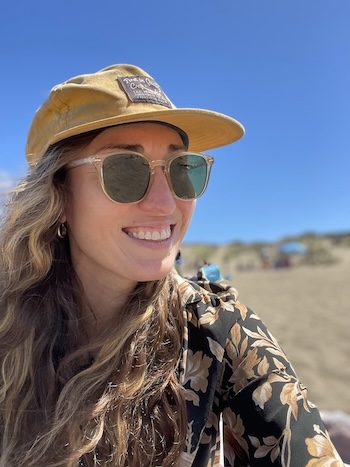
Who is Stacey Baradit?
She is the 2025 most improved player for the LPGA Amateurs Sacramento chapter. In 2025 she started with a handicap index of 18.2 and ended at 12.7. (Most improved is a mathematical calculation that compares a beginning handicap index at the beginning of a year and an ending index at the end of the year of all players with a Handicap Index in the Chapter. The highest improvement factor signifies greater improvement and receives the Most Improved Award for the Year).
Stacey’s recent journey to Sacramento from Connecticut shows that she embraces change and struggle, accepts joy and comforts, makes a plan, then does it. Elisa Lu, the 2026 Olympic gold medalist for ice skating, is Stacey’s image of how to play golf: for the joy of it and on her own terms. Outside of golf, Stacey maintains this ethos in multiple activities, including backpacking, skiing and trail running. She has an endless curiosity and is always one to try something new and learn from it. Most recently, it’s gardening and herbalism. Ultimately, it’s the combination of all of these experiences that brings her joy, and the mental fortitude to focus on the challenges of golf, as well as laugh at the ridiculous circumstances that inevitably occur during the game.
Game Day Strategies
The 2024 Club Championship: A Fearless Debut
Stepping onto the grass for her first chapter event, Stacey didn't just play; she transcended. She shattered her own expectations, carding a brilliant 84 when she had never broken 90. This wasn't just luck—it was the result of a powerful, quiet focus.
Stacey’s breakthrough performance was anchored by a “Nothing to Lose” Zen. As a newcomer, she shed the heavy weight of expectation, maintaining a composure that allowed her natural talent to surface. This was complemented by a singular focus, tuning out the leaderboard and her competitors, turning her game into the rhythmic, meditative flow of her swing. Key to this rhythm was a routine mental checklist: selecting the correct club for the moment, perfecting her alignment and aim, and ensuring a complete, balanced follow-through. She found strength in good company, finding the camaraderie of playing with Linda Reid and La Rhonda Sayles to be the perfect environment for a personal best.
At the time, with a handicap of 23, she played an astonishing 10 strokes better than her handicap, proving that a clear mind is a golfer's greatest asset.
A Motivating Tournament
She was honored to play in a 2-day National LPGA scramble with Vicky Philpott, Esther Garcia, and Linda Reid. As her contribution to the team, she figured being a long hitter would be a meaningful contribution, and focused on pre-game preparation to ensure a consistent and reliable drive. Practice at the range over months proved effective, and on one Par 4, she gave the team an eagle opportunity by driving the green.
Game Day Strategy in General
Her general game day philosophy is centered on the ability to relax and trust in her hard-earned knowledge and ability. She consciously avoids over-thinking during the heat of competition, operating under the principle that her skillset is what it is on game day, and game day isn’t the day to focus on changes or improvements. By narrowing her focus to specific and rehearsed swing thoughts per club, she eliminates mental interference. For example, she has a whippy Heavenwood (a Heavenwood is a Callaway club similar to a 7 wood), and thinks, “keep the rhythm” when swinging. Any additional power or effort ruins clean contact for that club, so a slower and tempo-ed swing is what that club demands. This disciplined approach extends to her equipment selection, where she knows which clubs to bench day-of to keep her game simple and effective.
Stacey’s physical preparation is just as rigorous as her mental game. Her pre-game regimen is a dedicated ritual: no alcohol, evening yoga to maintain flexibility, and a morning started with green tea (coffee makes her jittery) and a hearty breakfast. She prioritizes hydration with Powerade or a Liquid IV and keeps her energy levels stable (and fun) with Snickers as an intra-game snack. Most impressively, she maintains the elite fitness required to walk 18 holes while carrying her own clubs, a feat achieved through consistent strength training and trail running.
Preparation Throughout 2025
Structure. Throughout 2025, Stacey committed to a structured evolution, engaging in six specialized lessons with Will Harvey at Haggin Oaks. It had been over 20 years since she’d played regularly and she wanted to improve. Could she get to a single digit handicap? By spreading these sessions over ten months, she allowed for ample practice time to internalize each adjustment. She maintained a balanced rotation, practicing with her putter, wedges, irons, woods, and driver regularly to ensure that improvement in one area didn't come at the cost of another.
In 2025, Stacey also stepped into the role of a Mentor, which gave her the experience of sharing the joy of golf with others and inadvertently giving her an extra opportunity for practice. “Playing with new golfers requires me to go up to the red or green tees, so I use the opportunity to play the round with only Irons or remove my driver so I get Heavenwood practice (Heavenwood is a type of club). It’s a great way to get practice with clubs that don’t usually get as much playing time.” Additionally, she rotated between playing One Oak, Two Oak and Three Oaks on the Makenzie side, in order to add variety in course management and golf scenarios. This led to a hard-won revelation: practice is the ultimate antidote to fear. Her practice routine, twice a week, wasn't just about repetitions, but it was about building a bridge to trust in her clubs. By developing specific swing thoughts for her clubs (Short Irons, Long Irons, Driver, Heavenwood, Putter), she created that trust. By playing Approach games, changing targets, and transitioning intentionally between clubs during a range session, she created practice scenarios that would mimic game day situations.
Approach shot. Her approach shots became a study in strategic conservatism. By aiming for the center of the green, she allowed for natural variations in her stroke and consistently set herself up for a manageable two-putt. She focused her confidence on her wedges for anything under 80 yards, while setting her sights on mastering 100-145-yard approach shots for 2026. In a bold move for the coming year, Stacey is even reclaiming her natural left-handed putting style, a return to her intuitive roots after years of playing right-handed.
Versatility. Mastering technical versatility, she spent the year practicing hooks and slices learning the mechanics to perform them on demand, turning potential errors into controlled tools. This technical growth was paired with a significant investment in her toolkit; she upgraded from high school hand-me-downs to a $2,500 set of precision irons, a Heavenwood, Cleveland wedges and eventually her lefty putter.
Joy. Finally, Stacey focused on reclaiming the joy of the game. While she played it safe in tournaments, she used "fun play" to take risks and practice demanding shots like the flop. She maintained integrity by posting every score where strokes were counted and simplified her mechanical approach by adjusting her club choice for distance rather than manipulating the tempo of her swing. Through this balanced journey, Stacey Baradit has transformed her game into an art form.
Advice for Others
Lessons & Practice. Lessons are valuable, especially when actively working on improving areas of your game. More importantly is practicing what you’ve learned in that lesson. For example, Will really helped me with my chipping during a lesson and corrected a few bad habits, but it was the ongoing practice at 5ft, 10 ft and testing out flight paths in the front / back of my stance that improved my game.
Mental Game. Practicing ‘swing thoughts’ for my different types of clubs has been a gamechanger. It means during a match, I can fall back on those thoughts and relax. They ground me. For my long-irons, it’s ‘stay low, inside out’, which reminds me to keep my irons on a horizontal plane when I take them back, and emphasize coming inside-out during release. My natural tendency is to keep them too vertical, and then come outside-in, which kills clean contact. I’d advise folks to develop simple thoughts for each category of club during practice and rely on them during times of pressure. Also, have the mind of a goldfish. Nothing is better than forgetting your last shot and focusing on the shot in front of you!
First Meeting of the 2026 Education Book Club
The first meeting of the 2026 Book Club was held May 3. A video of the meeting is being shared so everyone can join in. The concepts found in Chapter 5 of Dave Pelz's Short Game Bible were discussed.
For a quick view, take steps toward a better short game if you only have 30 minutes. Registration for the Short Game Book Club is open under Events on the main web page.
- Go to timestamp 11:07 - 17:47 in the video for an overview of the Book Club
- Go to timestamp 25:25 - 57:01 for an overview and discussion of the concepts of Dave Pelz's Short Game Bible
Below are the links to the scoresheets for the wedge calibration and the short game handicap discussed in the book along with the practice logs for each and a quick definition of the handicap stations.
- Wedge Calibration
- Short Game Tally Record
- Short Game 2-Week Log
- Clock System Master
- Short Game Handicap Stations
Weather (and other) Cancellations - Who Makes the Call? Feb 2025
Explanation of Golf Acronyms
Have you ever wondered what the 2 club is? Click here to find out how to become a member
Class Descriptions
Member 2 Member Sessions:
Basic Rules of Golf - FREE
This session is taught by Marcia Whiting, Rules Certified Tournament Official and targets newer golfers, players returning to the game, and any player who could use a review of the most common situations encountered. The format is “on course” discussion and demonstration of basic rules. Topics include relief options from immovable obstructions, penalty areas, abnormal course conditions, and more.
Intermediate Rules of Golf - FREE
Think you know the rules? Ready for a challenge?
This class is designed for the golfer who has played several years and has a basic understanding of the rules of golf. You will be challenged to demonstrate your knowledge by responding to several situations. Can you quickly determine the correct course of action? Are you able to correct a situation where a mistake has occurred?
This is not a basic rules class. Marcia will present situations designed to test the golf rules knowledge of an intermediate golfer. Be prepared for an interactive, informative, and fun evening
How and Why You Need to Establish a Handicap - FREE
Join this class to find out what a “handicap” is and why you might want to establish one. Kris Corbridge is our in-house expert and official Handicap Chair. This session will answer your questions related to handicaps as you begin posting your scores. Included in this session: ▪ The What, Why and How of Handicaps ▪ The Scorecard ▪ How and Where to Post Your Scores ▪ Maximum Allowable Scores.
Match Play Rules & Practical Examples - FREE
If you like the excitement of the Solheim and Ryder Cup matches, then join us to learn the rules specific to golf in match play format with our very own Rules Certified Tournament Official, Marcia Whiting. Match play, the original golf format, is a fun way to play a round with friends of all skill levels. In addition to the rules, we will discuss the strategy of match play and role play common situations you will encounter during a match.
Game Improvement
Playing Wet Weather Golf
Keep these key points in mind to ensure you play your best when the ground is wet and muddy.
- When fairways are soggy due to heavy rainfall, the ball has a tendency to settle down into the grass. As a result, you’ll tend to hit behind the ball or fat. To make matters worse, you’ll feel like you’re hitting out of the rough. The ball will not have as much roll.
SOLUTION: Select one club more than you normally would and stand a bit taller at
address to promote ball-first contact.
- Play the ball more back than you normally would to ensure that you catch the ball first. For example, rather than left of center for a wood, play the ball more toward the center of your stance.
- With a modified ball position, more club, and a taller stance, you should pick the ball off the turf to avoid the mud-divot factor.
- If course conditions are bad or messy due to weather or outside influences, check with your event coordinator to see if lift, clean and place (also known as “winter rules”) is permitted for the specific event. This would allow you to mark your ball, pick it up to clean it, and then replace it within a specific area (usually six inches, not closer to the hole). This practice lessens the chance that you score badly due to uncharacteristic conditions of the course at no fault of your play.
Winter can be the perfect time to improve your golf game.
Here are some tips from Cindy Miller to help you do just that.
Improve Your Putting During Winter
Most people could eliminate three to five shots per round if they just improved their putting. Let’s say you don’t live near a dome and want to practice at home. What can you do?
1. Practice Your Putting on Carpet
You can purchase a 6-foot piece of indoor/outdoor carpet at a local hardware store. Lay the carpet out on your living room floor, basement, garage or wherever there is room. Place a quarter on the rug as the cup. Having something smaller than a hole will help you become more accurate and the real cup will appear huge to you.
Start practicing from 2 feet away, using your backhand. If you are right-handed, you will putt one-handed with only your right hand. Stand a little open to the target so you can easily see the line between the ball and the hole. Practice making 10 to 100 2-foot putts per day one-handed. (Your goal is to hit the quarter on each putt.)
Once you’re able to make most of the 2-footers one-handed, add your other hand. Be sure you can see the line and can hit the quarter on each putt.
As you become comfortable and gain confidence, move back to 3 feet, 4 feet, 5 feet and, eventually, 6 feet. You will make more putts when the snow melts.
2. Straighten Your Putting with a Yardstick
While you are at the hardware store, purchase a metal yardstick. Place the metal yardstick on the floor. On one side of the yardstick, there should be an open hole. Place a golf ball on top of the open hole. Practice hitting 3-footers down the yardstick. Your mission is to see how many putts you can roll all the way down the yardstick without the ball falling off. You will learn how to see a straight putt, how to set your clubface square to the target, and how to roll the golf ball on a straight line for 3 feet.
If you tend to open the face, the ball will fall off the yardstick to the right. If you pull it, the ball will fall off the left side.
Practice Your Full Swing Indoors
Most of us would love to hit all shots clean, airborne and straight. If you have room in your home to make half-swings with a short iron, I suggest you do so. You can use the indoor/outdoor carpet you purchased to practice putting to hit shots.
1. Pour a little flour on the carpet about the size of a quarter. Take small swings practicing brushing the carpet on the downswing where the flour is. Learning to make clean contact with the flour as your target without a ball will help you when there is a ball there.
2. I understand you cannot hit real golf balls in your living room. You can, however, purchase some marshmallows. Yes, I said marshmallows. You can practice hitting clean shots in the living room off the indoor/outdoor carpet using marshmallows as golf balls. It might be a little crazy, but at least you won’t hurt anything.
Work on Improving Your Alignment
Many people are unsure how to aim correctly. If you frequently watch the LPGA Tour on television, you will see many caddies standing behind players to help them line up their shots. In 2019, this will not be allowed, and players will need to line up their shots on their own.
The ball goes where the face points, not your shoulders. Learn to aim the clubface at the target and align your body parallel to the left of the target for right-handed players. Your body will be parallel to the right if you are left-handed.
Take a short iron. Find a wall in your house that you could practice setting up along. Pretend you are hitting a ball down that target line. Practice walking up to the ball parallel to the wall. Set up to the shot. The wall will not allow you to aim to the right. You may need to learn how to see the true line you want the ball to travel. It may look way left to you if you are right-handed or way right to you if you are left-handed.
Cindy Miller is a former LPGA Tour Player, a current member of The Legends Tour of the LPGA, a Golf Channel Academy Lead Coach, and 2010 LPGA National Teacher of the Year.